
This week, I wrote about some of the highs and lows the Heartland experienced this year in its quest to land more tech jobs and businesses. The good news: this year proved that there’s a healthy concentration of tech companies in places like Ann Arbor, Columbus, and Salt Lake City that are employing several hundred people or more each. The bad news: with giant tech companies like Amazon, Google, and Apple choosing established tech hubs over up-and-coming Heartland cities to add new offices, the gap between Middle America and places like New York City, San Francisco, Austin, and Seattle is not shrinking as quickly as it needs to.
With that in mind, there are a few topics that I think need to be top of mind in 2019 as we talk about how to close the gap between Silicon Valley and the rest of the country:
—How can we get cities to stop forking over as many subsidies in possible in an attempt to land new offices from Amazon and other large tech companies?
—Amazon and Apple’s expansion choices have shown that talent is the biggest determining factor when selecting new offices. How can we encourage cities to invest more in building a bigger pipeline of tech talent, and what are the most effective ways to do so.
—While some cities are seeing an increase in the number of total startups receiving seed funding, raising a Series A and beyond is still a struggle. How can we build better relationships between the coastal VC firms that can provide that funding, and seed stage Heartland firms?
On a programming note, I’ll be off the next two weeks, so the next newsletter will come in January. Thank you for joining the discussion over the past year, and see you in 2019.
Featured Video
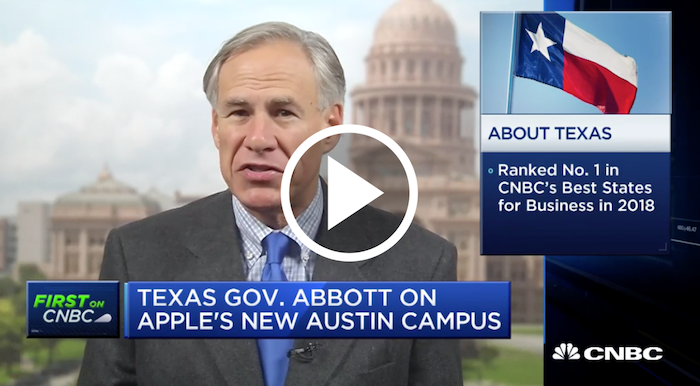
Check out this video from CNBC, “Texas Governor Greg Abbott speaks with CNBC about Apple’s new Austin campus”
From the Heartland Tech channel

Heartland Tech Year in Review: Middle America missed out on HQ2, but scored some startup successes
This year proved that cities in Middle America need to invest in their own tech communities, rather than trying to land jobs from the Amazons of the world.
